
- Home
- Government
- Federal Government
Federal Government
The U.S. Federal Government comprises three distinct branches: legislative, executive, and judicial, whose powers are vested by the U.S. Constitution in the Congress, the president and the federal courts. The three branches work together to ensure a system of checks and balances, preventing one branch from becoming too powerful. Each branch has specific responsibilities and powers.
The judicial branch is independent, with federal judges appointed by the president and confirmed by the Senate. Congress shapes the judiciary, including setting the number of Supreme Court justices, which has been nine since 1869. Judges serve for life unless impeached and convicted, ensuring they can focus on the law without political pressures.
Federal courts interpret laws and apply them to individual cases. While Congress defines most jurisdictions, the Supreme Court has original jurisdiction in specific cases, such as state disputes. The Court typically hears appellate cases and grants certiorari when important legal issues are at stake.
The judicial process ensures fairness, with constitutional protections like the right to a fair trial and legal representation. Criminal cases are tried under state or federal law, while civil cases deal with disputes between individuals or organizations. After a trial, parties can appeal for legal errors.
Appeals are heard by appellate courts, which review the case based on legal arguments. The U.S. Supreme Court may hear appeals, usually focusing on significant legal issues or conflicts between lower courts.
The president of the United States leads the executive branch. The president is responsible for implementing and enforcing the laws written by Congress and, to that end, appoints the heads of the federal agencies, including the Cabinet. The vice president is also part of the executive branch, ready to assume the presidency should the need arise.
Contact President Donald Trump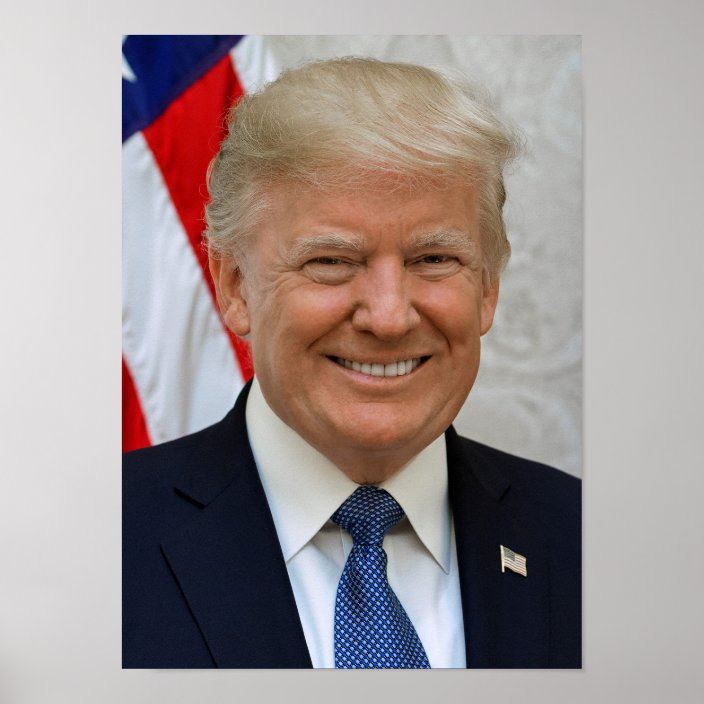
The White House
1600 Pennsylvania Ave NW
Washington, DC 20500
The legislative branch consists of the House of Representatives and the Senate, forming the United States Congress together. The Constitution grants Congress the sole authority to enact legislation and declare war, the right to confirm or reject many presidential appointments, and substantial investigative powers. To pass legislation and send it to the president for signature, the House and the Senate must pass the same bill by majority vote.
House of Representatives
The House of Representatives has 435 elected members, divided among the 50 states in proportion to their total population. Members are elected every two years. The Town of Palm Beach is in District 22, making Lois Frankel the representative. The House has several powers assigned exclusively to it, including the power to initiate revenue bills, impeach federal officials, and elect the president in the case of an Electoral College tie.
Contact Rep. Lois Frankel
- Washington, DC Office
- 2305 Rayburn House Office Building
Washington, DC 20515 - tel: (202)225-9890
- 2305 Rayburn House Office Building
- Delray Beach Office
- 7499 West Atlantic Ave, Unit 06
Delray Beach, FL 33446 - tel: (561)998-9045
- 7499 West Atlantic Ave, Unit 06
Senate
The Senate is composed of 100 Senators, 2 for each state. The Senators have been elected to six-year terms by the people of each state. Senators’ terms are staggered so that about one-third of the Senate is up for reelection every two years. The Florida elected Senators are Rick Scott and, recently, Ashley Moody, who will be stepping into Marco Rubio's position. The Vice President of the United States serves as President of the Senate and may cast the decisive vote in the event of a tie in the Senate. The Senate has the sole power to confirm those of the President’s appointments requiring consent and provide advice and consent to ratify treaties.
Contact Sen. Ashley Moody
- B40-B Dirksen Senate Office Building
- 50 Constitution Ave NE
Washington, DC 20510 - tel:(202)224-3041
- 50 Constitution Ave NE
Contact Sen. Rick Scott
- Capital Office
- 110 Hart Senate Office Building
Washington, DC 20510 - tel:(202)224-5274
- 110 Hart Senate Office Building
- Local Office
- 415 Clematis Street
Suite 201
West Palm Beach. FL 33401 - tel:(561)514-0189
- 415 Clematis Street
| Department | Purpose | Service |
| United States Coast Guard | Oversees bridge openings and navigational clearance on waterways for maritime traffic | Assist with issues related to bridge openings, navigational clearance, or maritime safety concerns |
| United States Army Corp of Engineers | Involved in ensuring that bridges over navigable waters comply with federal regulations, particularly regarding waterway impacts and environmental factors | Assistance with matters regarding environmental impact assessments, permits, or compliance related to bridges over navigable waters |
| Department of Agriculture | Focus on farming, forestry, food safety, and nutrition | Assistance with food assistance programs, agricultural loans, or rural development initiatives |
| Oversee economic growth, job creation, and technological innovation | Assistance with business resources, economic data, or the Census Bureau | |
| Department of Defense | Responsible for national defense and military affairs | Assistance with veterans’ services, defense contracting, or military recruitment |
| Ensure access to quality education | Assistance with student loans, grants, educational programs, or K-12 and higher education support | |
| Department of Energy | Manage energy resources, nuclear security, and energy research | Assistance with energy efficiency programs or access to renewable energy incentives |
| Department of Health and Human Services | Focus on public health, welfare programs, and social services | Assistance with healthcare services, including Medicaid, or support for public health initiatives |
| Department of Homeland Security | Ensure national security and emergency preparedness | Assistance with disaster response, immigration services, or cybersecurity support |
| Department of Housing and Urban Development | Manage housing policies and urban development | Citizens may need assistance with affordable housing, home loans, or homelessness programs |
| Department of Interior | Manage national parks, public lands, and natural resources | Assistance with national park access, wildlife protection, or resource management |
| Department of Justice | Oversee the legal system, including federal law enforcement and civil rights | Assistance with criminal justice issues, legal aid, or federal investigations |
| Department of Labor | Oversee working conditions, employment laws, and labor rights | Assistance with job training, unemployment benefits, or workplace rights |
| Manage U.S. foreign relations and diplomatic efforts | Assistance with passports, visas, or international travel advisories | |
| Department of Transportation | Oversee transportation infrastructure and safety | Assistance with vehicle registration, travel safety, or transportation grants |
| Manage federal finances, tax policies, and the monetary system | Assistance with tax filing, financial assistance programs, or economic policy information | |
| Department of Veterans Affairs | Provide services to military veterans, including healthcare and benefits | Assistance with veterans' medical care, disability claims, or pension benefits |
